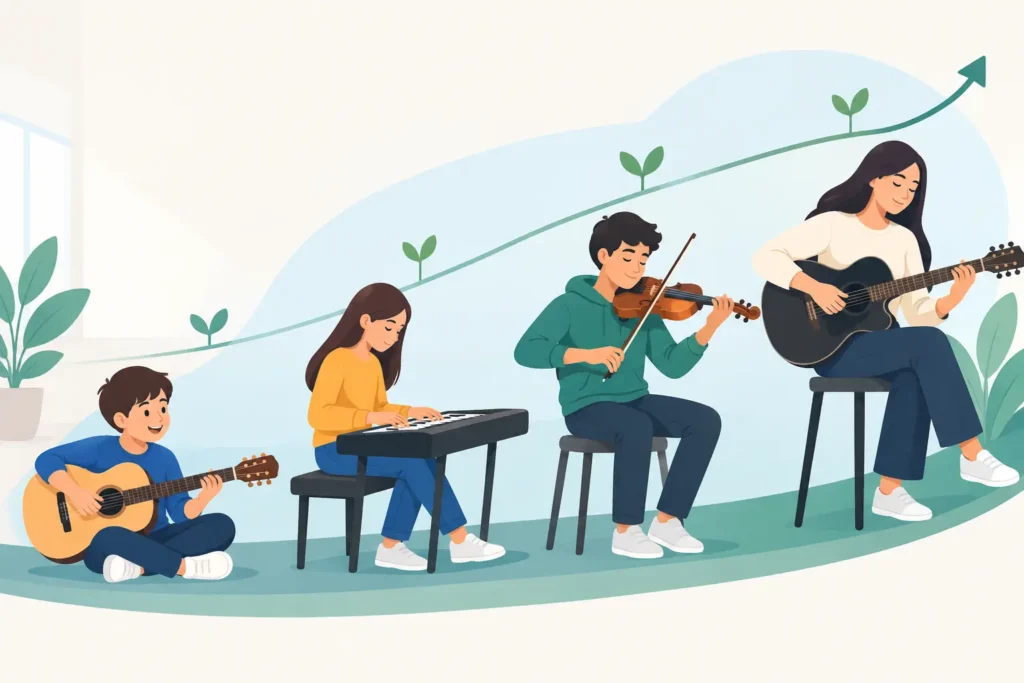
A child who proudly plays their first recognisable tune, a teenager preparing for a grade examination and an adult returning to the piano after years away all need something slightly different from music lessons. What they have in common is the chance to make music feel enjoyable, achievable and worth continuing. The right teaching turns those early notes into confidence, skill and a lasting connection with music.
For families and learners across Essex, choosing tuition is not simply a matter of picking an instrument or finding a free evening. It is about finding experienced guidance, a comfortable place to learn and a pace that keeps the learner motivated. Whether the aim is a new hobby, a school performance, an examination or advanced musical development, good tuition meets the student where they are and gives them a clear next step.
What good music lessons should feel like
A productive lesson has structure, but it should never feel like a test every week. Learners need to understand what they are working towards, hear their improvement and have time to ask questions. For younger children, this often means combining careful technique with games, familiar songs and achievable goals. For adults, it may mean fitting practice around work and family life while choosing music that makes sitting down to play feel rewarding.
The teacher matters enormously. A specialist teacher brings more than technical knowledge of an instrument. They know how to spot an awkward hand position before it becomes a habit, how to explain rhythm in a different way when the first explanation has not landed, and when to encourage a student to stretch themselves. Just as importantly, they create an atmosphere where mistakes are treated as part of learning rather than a reason to stop.
Progress is rarely a straight line. One week, scales may feel easy and a new piece may seem impossible; the next, the piece suddenly begins to flow. Regular lessons provide continuity through those moments. They give learners a chance to celebrate what has improved, address what is holding them back and leave with a realistic focus for the week ahead.
Choosing the right format for music lessons
There is no single best lesson format for every musician. The most suitable choice depends on the learner’s age, goals, confidence and timetable.
One-to-one tuition
Private lessons offer focused attention and a programme shaped around the individual. They are particularly valuable for learners working towards examinations, tackling more advanced repertoire or developing a specific technique. A child who needs patient encouragement and an adult with a clear musical ambition can both benefit from having the lesson tailored to them.
One-to-one tuition also makes it easier to change direction. A guitarist who starts with pop songs may become curious about fingerstyle playing. A pianist might decide to work towards grades after initially learning for enjoyment. Personal teaching can adapt without making the student feel they have fallen behind a group.
Group learning
Group classes can be an excellent introduction to piano or keyboard. Learning alongside others can make the first steps less daunting and adds an enjoyable social element. Students learn individually, at their own pace, playing with headphones on.
Some students will prefer the individual attention of private lessons, while others thrive on the encouragement of a group setting. Neither route is more serious than the other; the important thing is finding a format that keeps the learner engaged.
Live online lessons
Online tuition can make regular learning more practical for busy households, adults with changing schedules or students who are unable to travel. A live lesson still provides feedback, demonstration and accountability, provided the learner has a suitable instrument, a reliable connection and a quiet space.
For a complete beginner, in-person teaching can be especially helpful for checking posture and instrument setup. For an established student, online lessons may offer valuable flexibility. It depends on practical circumstances as well as personal preference.
Finding an instrument that invites practice
A learner is far more likely to practise on an instrument that feels comfortable, sounds good and is appropriate for their stage. This does not always mean buying the most expensive option. A beginner needs a reliable instrument that is correctly sized, easy enough to play and capable of supporting good habits.
Parents often ask whether it is better to buy an instrument before the first lesson. The answer depends on what is being learned. Early advice from a teacher or knowledgeable music retailer can prevent common problems, such as choosing the wrong guitar size, purchasing a keyboard with unsuitable keys or starting a brass instrument that needs attention before it can be played properly.
Accessories matter too. A music stand, metronome, spare strings, correctly fitted shoulder rest or comfortable drumsticks can remove small frustrations that otherwise get in the way of practice. Instruments also need care. Regular servicing, repairs and piano tuning protect the investment and help learners hear the results their effort deserves.
Building practice into real family life
The most successful practice routine is usually the one that can actually be repeated. For a young beginner, ten focused minutes on most days may be more useful than an hour of reluctant playing at the weekend. Older students may need longer sessions for repertoire, technical work and theory, but consistency still matters more than occasional bursts of effort.
It helps to connect practice with an existing part of the day: after homework, before supper or shortly after arriving home. Keep the instrument accessible where possible. A keyboard packed away in a cupboard is harder to begin than one ready to play, and a guitar on a safe stand is a visible invitation to pick it up.
Parents do not need to be musicians to be supportive. Asking a child to play their favourite piece, noticing a new rhythm or simply protecting a regular practice time can make a real difference. Praise effort as well as performance. The willingness to try a difficult section again is often the habit that carries a learner through the inevitable challenging stages.
Progress means more than grades
Examinations can provide a useful framework. They offer goals, repertoire and a recognised measure of achievement, and many students enjoy the sense of occasion that comes with preparing for a grade. For ambitious learners, they can also support progression towards further study and performance opportunities.
But grades are not the only measure of musical success. A student who can accompany themselves singing, join a band, play at a family celebration or finally perform a piece they have loved for years has made meaningful progress. Some learners will want formal qualifications; others will want confidence, relaxation and the joy of making music after a busy day. A good teacher respects both aims and helps students set goals that are genuinely theirs.
Music theory also has its place. It becomes more useful when it is connected to what students can hear and play, rather than treated as a separate obstacle. Understanding why chords work together or how a rhythm is built can make learning faster and music more expressive.
A welcoming place to keep learning
Starting something new takes courage at any age. Children may worry about getting notes wrong, teenagers may compare themselves with friends and adults may feel self-conscious because they believe they should have started earlier. They should not have to prove they belong before their first lesson.
At Allegro Music Academy, students can learn across a wide range of instruments in purpose-built teaching rooms, with experienced teachers and lesson options available seven days a week. With academies in Chelmsford, Southend and Colchester, learners can choose a setting and format that suits their routine without losing the personal encouragement that makes tuition worthwhile.
The best time to begin is not when life becomes perfectly quiet or when confidence arrives first. Choose an instrument that sparks interest, allow room for steady progress and give the first lesson a chance to become the start of something that stays with you for years.