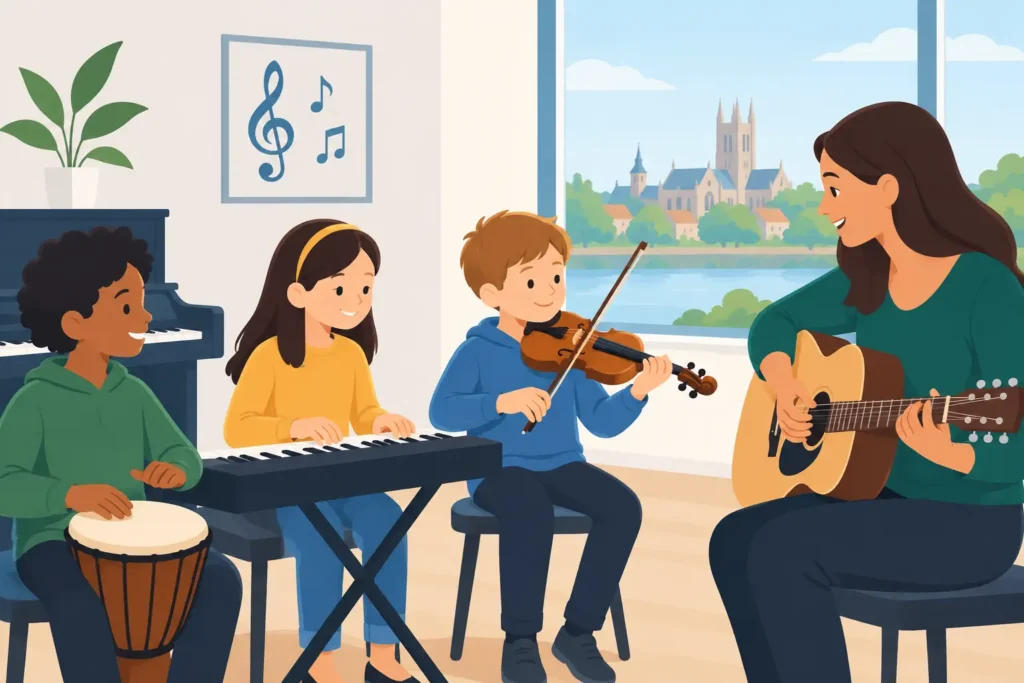
A child tapping out a rhythm on the kitchen table, singing constantly in the car or asking how a favourite song is played is already showing something worth encouraging. Music lessons for children in Chelmsford can turn that early curiosity into a skill they are proud to build, without taking the enjoyment out of it. The right start is not about creating pressure or choosing the most impressive instrument. It is about finding a teacher, format and pace that helps your child feel capable from their very first notes.
Learning music can give children a regular space to concentrate, express themselves and work patiently towards a goal. Some will want to perform, take exams or join a band one day. Others simply need an activity that is theirs, away from school routines and screens. Both are valuable reasons to begin.
What to look for in music lessons for children in Chelmsford
For parents, the practical questions matter just as much as the musical ones. Is the setting welcoming? Does the teacher understand beginners? Can lessons fit around school, clubs and family life? A good academy should make those decisions feel straightforward, while still giving each child individual attention.
Experienced specialist teachers are particularly important in the early stages. Children often need a different explanation, demonstration or piece of music before a new idea clicks. A patient teacher can adapt the lesson to the learner in front of them, balancing clear technique with songs and activities that keep motivation high.
A professional teaching environment also helps children settle into a purposeful routine. Purpose-built rooms, suitable instruments and a calm, friendly welcome tell a young learner that their lesson matters. It need not feel formal or intimidating. In fact, children usually progress best when expectations are clear but the atmosphere remains relaxed.
Start with your child, not the instrument
Piano, keyboard, guitar, drums, violin, ukulele, vocals and woodwind all offer rewarding ways into music. There is no single best choice for every child. The best first instrument is often the one that makes them want to come back next week.
A child who loves melody and enjoys working independently may be drawn to piano or violin. Someone with plenty of energy and a strong sense of pulse might enjoy drums. Guitar and ukulele can be especially appealing for children who want to accompany songs, while singing is a natural starting point for a child who is always humming along to the radio.
It is sensible to consider the practical side too. Some instruments are easier to begin with at home than others, and younger children may need a smaller-sized instrument. Their attention span, hand size and confidence all play a part. A conversation with an experienced teacher or instrument specialist can prevent a rushed purchase and help you choose something that is comfortable and appropriate.
Is there a right age to begin?
Readiness matters more than a fixed age. A child does not need to read music before they start, and they do not have to be naturally confident. They do benefit from being able to listen for short periods, follow simple guidance and practise little and often with support at home.
Very young beginners may respond well to short, playful activities and familiar songs. Older children and teenagers may enjoy setting clearer goals, learning music they recognise or working towards grades. A skilled teacher will meet them where they are rather than expecting every learner to follow the same route.
Choose a format that suits family life
One-to-one lessons offer focused support and a plan tailored to a child’s interests and progress. They are often a good option for a child who is shy, has a specific goal or benefits from close guidance. The teacher can spend more time on technique, reading, repertoire or preparing for an exam, depending on what is needed.
Small-group classes can bring a different kind of energy. Learning alongside other children can make music feel social and encouraging, particularly for beginners who enjoy shared activities. Group lessons can also develop listening skills and the confidence to play in front of others. The trade-off is that the lesson naturally has to serve more than one learner, so it may not suit every personality or ambition.
Live online lessons are useful when travelling is difficult or a busy week makes an in-person appointment hard to manage. They still need a quiet space, a reliable device and an adult nearby for younger children. For some families, online learning is a helpful regular option; for others, it works best as an occasional alternative rather than a complete replacement for face-to-face tuition.
The most suitable choice depends on your child and your household. Flexibility is valuable, but consistency matters too. A weekly lesson at a time you can realistically keep is far more helpful than an ideal plan that becomes difficult after a few weeks.
Build confidence before chasing perfection
Early musical progress is not always dramatic. One week a child may learn two notes, the next they may play a short piece with a steadier rhythm. Those small gains are the foundations of confident playing.
The most encouraging teachers notice and name that progress. They help children understand that mistakes are part of learning, not a sign they are failing. This is especially important when a new technique feels awkward or a piece takes longer than expected. Children who feel safe to try again are more likely to develop resilience as well as musical ability.
Exams and performances can be excellent goals when they suit the learner. They offer structure, milestones and a real sense of achievement. However, they should support a child’s enjoyment rather than replace it. Some learners thrive on a clear syllabus; others stay engaged through songs, improvisation, ensembles or learning to play music they love. There is room for both a well-planned pathway and personal choice.
Make practice achievable at home
Parents do not need to be musicians to support practice. The most useful thing is to create a predictable, low-pressure routine. Ten focused minutes on several days can be more effective than a long, frustrated session once a week.
Ask your child to show you one thing they enjoyed in their lesson. Keep their instrument accessible where possible, make sure it is in good working order and celebrate effort as well as results. A simple reminder after school may be enough for one child, while another will need practice built into the evening routine.
Try to avoid turning every session into a test. If they are struggling, a brief break and a return to one small section is usually more productive than insisting they finish the whole piece. Their teacher can advise on what to practise and how to approach a difficult passage, so concerns do not have to be solved at home alone.
Consider the instrument as part of the learning experience
A poorly maintained instrument can make learning unnecessarily hard. Stiff keys, slipping tuning pegs, worn strings or an instrument that is the wrong size can affect both sound and confidence. Beginners do not need the most advanced equipment, but they do need something reliable that makes a pleasant sound and responds properly.
This is where practical, specialist advice is useful. Families may need help choosing an instrument, finding suitable accessories, arranging repairs or servicing, or keeping a piano properly tuned. Starting with the right setup removes a common source of frustration and lets children concentrate on playing.
At Allegro Music Academy, families can choose from private tuition, small-group classes and live online lessons, supported by experienced teachers and a long-established local music community. With academies and specialist retail support close at hand, children can develop their skills in a setting that takes their interests seriously while keeping the joy of music at the centre.
A first lesson is simply an opportunity to see what catches your child’s imagination. Give them permission to be a beginner, listen to what they enjoy and let steady encouragement do the rest.