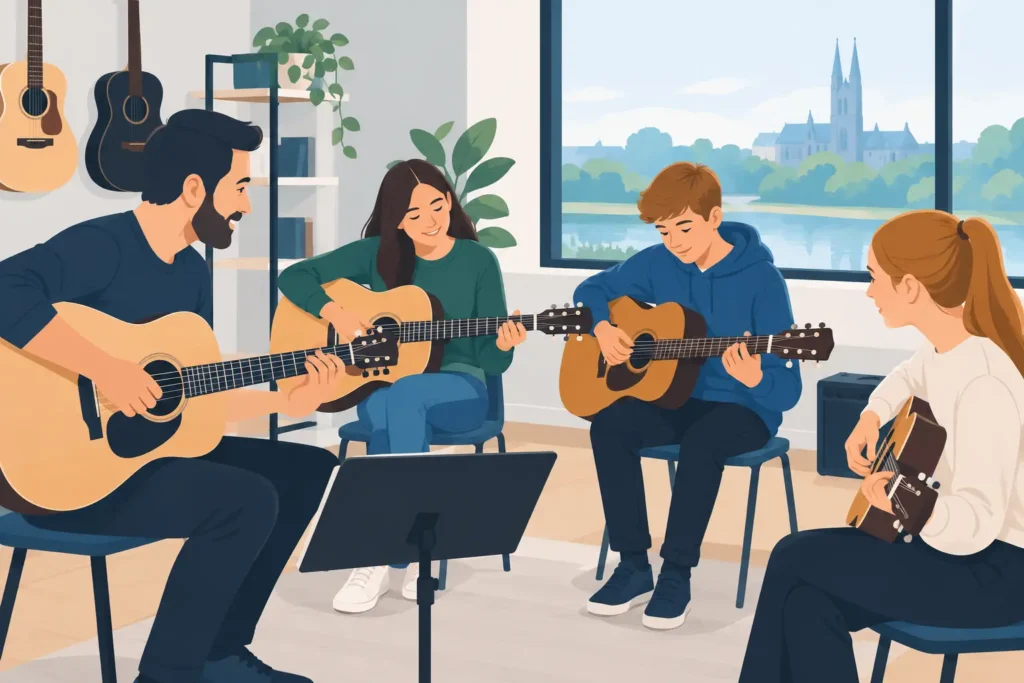
The first time a learner plays a recognisable chord sequence, the guitar stops feeling like an object with six difficult strings and starts becoming their instrument. That moment is why guitar lessons Chelmsford should be about more than learning shapes from a chart. The right tuition gives children, teenagers and adults the encouragement, technique and direction to enjoy making music from the very beginning.
At Allegro Music Academy, learners are taught as individuals. Some arrive eager to play their favourite songs; others want to build confidence, prepare for grades or return to an instrument they enjoyed years ago. All deserve patient teaching, clear goals and a relaxed place to learn.
Guitar lessons in Chelmsford that fit the learner
There is no single reason to learn guitar, so there should not be a single route through it. A young beginner may need short, practical activities that make lessons feel exciting and achievable. A teenager might want to develop riffs, rhythm skills and the confidence to perform. An adult beginner may be looking for a rewarding hobby after work, while a more experienced player may want focused help with technique, theory or examination preparation.
One-to-one lessons allow the teacher to shape each session around the learner’s pace and musical interests. This is particularly valuable in the early stages, when good habits make a real difference. Hand position, posture, tuning, picking and chord changes can all feel unfamiliar at first. With expert guidance, they become natural foundations rather than frustrations to work around later.
Small-group classes can also be an excellent choice for learners who enjoy sharing the experience. Playing alongside others develops listening, timing and confidence, while live online lessons can offer useful flexibility for busy family routines. The best format depends on the student, their timetable and what helps them feel most comfortable.
What a good first guitar lesson looks like
A first lesson should never feel like a test. It is an opportunity for the teacher to understand what the learner wants from music and to introduce the instrument in a manageable way. For a complete beginner, this may include learning the names of the strings, how to hold the guitar comfortably, how to tune it and how to produce a clear sound.
From there, progress often begins with a few simple chords and a steady pulse. These small building blocks quickly lead towards real music. Even when a chord change is not perfect yet, playing it in time is a meaningful step forward.
A thoughtful teacher balances enjoyment with structure. Learners need pieces and songs that make them want to practise, but they also need exercises that improve finger strength, coordination and rhythmic accuracy. Neither side should be neglected. Playing only familiar songs can limit development, while concentrating only on technical drills can take the joy out of learning.
For children, lessons can develop far more than musical ability. Remembering patterns, listening carefully, persevering through a tricky passage and performing a piece all help build confidence. The progress may be gradual, but it is highly visible when a child who was once hesitant begins to play with assurance.
Choosing the right guitar to begin with
The type and size of guitar matter, especially for younger players. A guitar that is too large, poorly set up or uncomfortable to hold can make early learning needlessly difficult. Children often benefit from a smaller instrument that suits their height and reach, while adults need a guitar that feels comfortable in their hands and matches the music they hope to play.
Acoustic, classical and electric guitars each offer something different. A classical guitar has nylon strings, which many younger beginners find gentler on the fingers. Steel-string acoustic guitars are popular for singing along and songwriting, while electric guitars can be a natural choice for learners inspired by rock, pop, indie or blues. There is no universally correct starting point. The most suitable guitar is the one a learner can play comfortably and feels excited to pick up.
It is also worth seeking expert advice before buying. A properly adjusted instrument is easier to tune, easier to fret and more enjoyable to practise on. As skills develop, practical support with strings, accessories, repairs and servicing helps keep the instrument ready to play.
Practice that works in a busy week
Long, occasional practice sessions are rarely as effective as short, regular ones. For a beginner, ten focused minutes several times a week can be far more productive than trying to fit everything into one rushed session. The aim is to make playing part of normal life, rather than another pressure in an already full week.
A simple routine might include tuning the guitar, revisiting one familiar chord progression, spending a little time on a new exercise and ending with a song or riff the learner enjoys. Children often respond well to a clear, realistic target agreed with their teacher. Adults may find it helpful to leave the guitar somewhere visible and easy to reach, rather than packed away in a case.
Progress will not always feel even. Fingers may be sore at the beginning, chord changes can seem slow and some weeks will be busier than others. That is normal. A supportive teacher can adjust the pace, break a challenge into smaller steps and make sure the learner recognises how far they have already come.
Building skills beyond the first few songs
Learning songs is a brilliant reason to play guitar, but lasting progress comes from understanding what makes those songs work. As a player develops, lessons can introduce rhythm, scales, reading notation or tab, improvisation, chord construction and ear training. These skills give learners more freedom to play with others, write their own music and work out songs independently.
For ambitious students, structured tuition can support examination preparation and more advanced performance goals. For others, the aim may simply be to play confidently at home, accompany singing or join friends for a relaxed music session. Both routes are worthwhile. Musical progress is personal, and a good teacher helps each learner set goals that are motivating rather than intimidating.
Playing regularly with or for other people can be particularly valuable. It teaches players to keep going after a small mistake, listen to the beat and communicate through music. For many learners, this is where technical work begins to feel purposeful.
A welcoming place to learn and grow
The environment around a lesson matters. Parents need to know their child is learning in a secure, professional setting. Adult learners need the reassurance that they will not be judged for starting late or feeling rusty. Purpose-built teaching rooms and experienced specialist teachers create the conditions for focused learning, while a friendly approach makes it easier to ask questions and enjoy the process.
Nearly 50 years of music education has shown that people learn best when they feel supported. Some learners move quickly through new material; others need more time to settle in. Some are keen to perform, while others prefer the quiet satisfaction of playing for themselves. Each approach can lead to a lifelong love of music.
With seven-day availability, lessons can fit around school, work and family commitments more easily. That flexibility matters because consistency is one of the strongest foundations for musical development. The easier it is to keep lessons and practice part of the routine, the more likely a learner is to stay engaged.
A guitar can become a source of confidence, creativity and connection at any age. Whether the goal is a first chord, a favourite song, a grade examination or confident performance, the most helpful next step is simply to begin. Book a lesson and give yourself, or your child, the chance to discover the joy of making music.