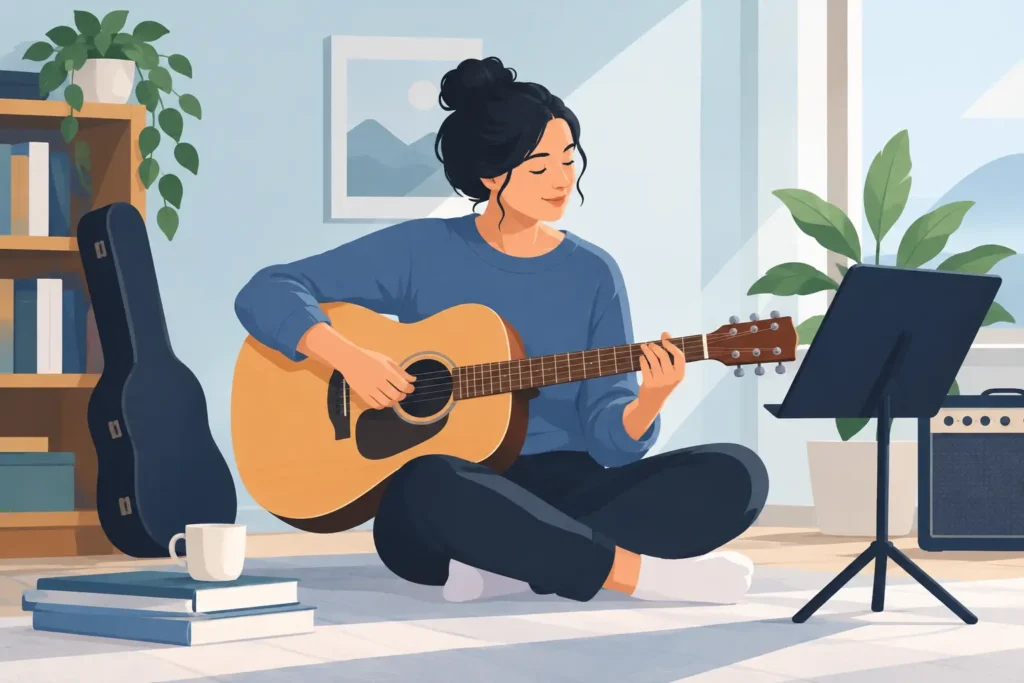
The first notes back can feel surprisingly exposing. You may remember playing scales without thinking, yet find your fingers slow to respond. Perhaps you stopped after school, work became busy, family life took over, or your instrument has spent years in its case. This guide to returning musicians is here to remind you that previous experience has not disappeared – it is simply waiting to be brought back into use.
Returning to music is not about recreating the player you were at 14 or proving anything to anyone. It is an opportunity to enjoy music on your own terms, with clearer reasons for playing and a greater appreciation for each small improvement.
A guide to returning musicians: begin where you are
One of the most common mistakes returning players make is starting at the point where they left off. If you once worked through advanced pieces, it can be frustrating to go back to simple exercises. Yet a short period spent rebuilding fundamentals is usually the quickest route to playing confidently again.
Start with an honest, kind assessment. Play a familiar piece slowly and notice what feels comfortable. Can you still read music with ease? Is your rhythm steady? Do your hands, embouchure or voice tire quickly? There is no pass or fail here. These observations simply give you a useful starting point.
Musical memory is remarkably durable. You may not recall every scale or chord shape straight away, but your ear, sense of phrasing and awareness of what good playing feels like often return sooner than expected. Give technique time to catch up. For pianists, that may mean relaxed hand positions and gentle finger exercises; for guitarists, it may be rebuilding chord changes and fretting-hand strength; for wind and brass players, breath control and endurance deserve patient attention.
If discomfort becomes pain, stop rather than pushing through it. Adult bodies and routines change, and good technique should support enjoyable, sustainable playing. A specialist teacher can spot tension or inefficient habits early, before they become discouraging.
Set a reason to play, not just a practice target
A goal such as practise for 30 minutes every day can be helpful, but it is not always enough to bring you back after a long break. A more personal reason gives your practice direction. You might want to play a favourite song at home, accompany your child, join a local ensemble, sing with greater confidence, work towards an examination, or simply have a regular creative space in the week.
Choose one main aim for the next two or three months. Keep it realistic and specific. Learning the opening section of a much-loved piece is more motivating than vaguely deciding to improve. If you have several interests, that is perfectly fine, but make one of them your priority while you rebuild momentum.
It also helps to choose music you genuinely want to hear. Technical studies have their place, especially when they solve a particular problem, but they should support your musical life rather than replace it. A well-planned lesson can combine the pleasure of familiar music with new material that develops your reading, coordination and musical understanding.
Keep practice short enough to happen
A returning musician does not need an elaborate routine. Consistency matters far more than one ambitious session followed by a fortnight away from the instrument. Ten focused minutes on a busy day can protect the habit and keep your connection with the music alive.
Try to leave your instrument accessible where possible. A guitar on a stand, a keyboard ready to switch on or sheet music open on the piano makes the first step much easier. If your instrument must stay in its case, prepare it in advance when you know you will have time to play.
A useful session has a simple shape: begin with something that wakes up your hands, voice or breath; spend time on one skill that needs attention; then finish with a piece or song you enjoy. Ending on music you like makes it more likely that you will return tomorrow.
Avoid measuring every session against your past standard. Some days will feel fluent and others will not, particularly while strength and coordination are returning. Progress is rarely a straight line. What matters is that a passage which felt awkward three weeks ago begins to feel familiar.
Refresh your instrument before it holds you back
An instrument that has been unused for years may need some care before it can give you its best. Old strings, sticky keys, worn pads, a slipping bridge or an unreliable cable can make practice harder than it needs to be. Many players assume they have lost their ability when the real issue is an instrument in need of attention.
Look for obvious signs first. Check whether a guitar or bass stays in tune, whether piano keys respond evenly, whether violin pegs hold securely and whether wind instrument pads seal properly. Brass players should make sure slides and valves move freely. Vocalists may benefit from a quiet, private place to warm up without forcing the voice.
A professional service or repair can be a worthwhile fresh start, particularly for instruments that have been stored in lofts, garages or spare rooms. It is also a good time to review essentials such as a comfortable stool, music stand, metronome, reeds, strings, rosin or suitable lighting. Small practical improvements can make practice feel far more inviting.
Do not feel obliged to replace an older instrument immediately. Some instruments deserve restoring, while others may no longer suit your needs or level. Expert advice can help you make that decision without pressure. At Allegro Music Academy, returning players can combine tuition with knowledgeable support on instruments, accessories and servicing when needed.
Lessons can make the return feel lighter
Private lessons are not only for beginners or young people preparing for grades. For adults returning to an instrument, regular tuition provides structure, reassurance and a chance to ask the questions that have been sitting in the back of your mind for years.
A good teacher will not assume that you want to repeat your childhood lessons. They will listen to what you enjoyed, what made you stop and what you would like music to look like now. Perhaps you want to learn by ear, improve your improvisation, revisit classical repertoire, play contemporary songs or understand theory properly for the first time. The right approach depends on your aims.
Lessons also bring perspective. When you practise alone, it is easy to focus entirely on missed notes. An experienced teacher can recognise improvements in tone, timing, posture and musical expression that you may overlook. They can adjust the pace before frustration sets in and introduce material that is challenging without being overwhelming.
For some returning musicians, one-to-one tuition offers the most tailored support. Others enjoy the encouragement and shared energy of a small group, while online lessons can be a practical option when travel or family commitments make attendance difficult. The best format is the one you can attend regularly and enjoy.
Make room for the social side of music
Music is often easier to sustain when it connects you with other people. You do not need to be performance-ready to share it. Playing a duet, accompanying a family member, attending an informal workshop or meeting other learners can make practice feel like preparation for something enjoyable rather than another task on the list.
Performance can be part of the journey, but it does not have to be the destination. Some returning musicians thrive on having a date in the diary; others find public playing intimidating at first. Both responses are valid. Start with low-pressure opportunities, such as playing for a supportive friend, recording a short piece for yourself or joining in with another musician at home.
The confidence that develops through music often reaches beyond the instrument. Making time for a skill you care about, hearing your own progress and being part of a welcoming musical community can be deeply rewarding at any age.
Your return does not need to be dramatic. Pick up the instrument, play one familiar phrase, and allow that small sound to be the beginning of something worth keeping.