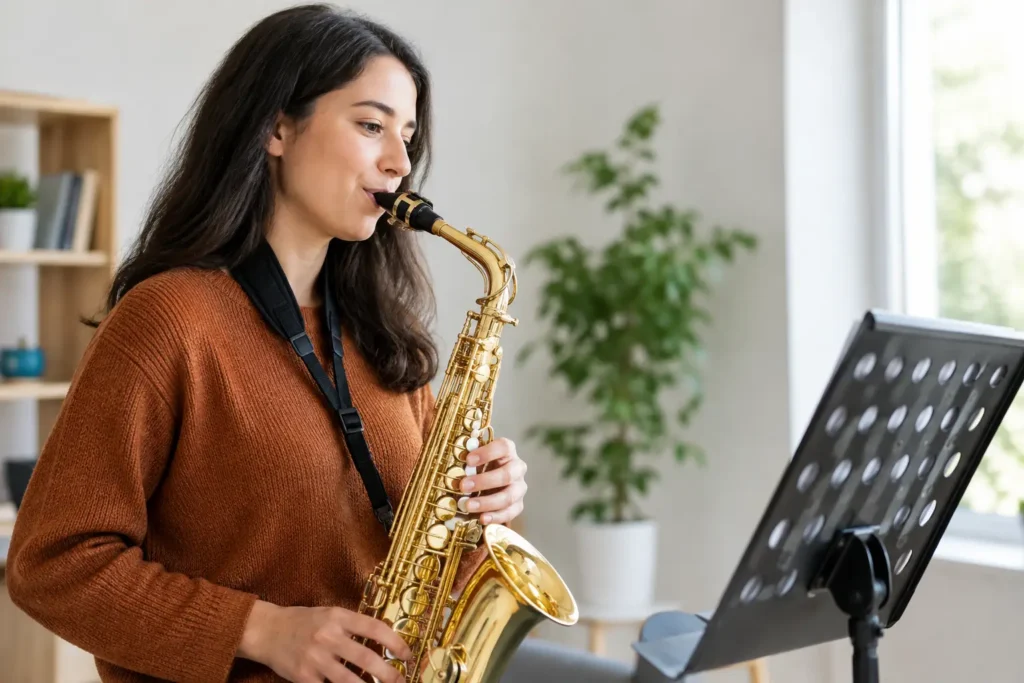
The first sound from a saxophone is rarely the silky note people imagine from a favourite jazz record. It may be breathy, a little squeaky or surprisingly loud – and that is completely normal. Saxophone lessons for complete beginners are about turning those first attempts into a sound you can recognise, control and enjoy, one small step at a time.
For children, teenagers and adults alike, the saxophone offers a wonderfully direct route into making music. You can hear progress early on, play familiar tunes sooner than you might expect and develop the confidence to perform for yourself, family or friends. The key is starting with the right instrument, a comfortable setup and patient guidance from a teacher who understands what a new player needs.
Why choose the saxophone as a first instrument?
The saxophone is expressive, sociable and full of character. Its warm tone suits jazz, pop, soul, rock, concert music and wind bands, so beginners have plenty of musical directions to explore as their skills grow. It also works beautifully as a solo instrument, which can make practice feel rewarding even before you begin playing with others.
Many people assume that the saxophone is too difficult for a complete beginner because it looks complicated. There are keys, pads and a reed to consider, but the finger patterns become familiar through regular playing. Unlike some instruments, you do not need years of study before producing a musical note. With good tuition, most beginners can start playing simple notes and short tunes in their earliest lessons.
Age and physical comfort do matter. Younger children may find an alto saxophone more manageable than a larger tenor, while some very young learners may be better prepared by beginning on another woodwind instrument first. An experienced teacher can advise honestly, rather than forcing a one-size-fits-all choice. Adults often enjoy the saxophone as a fresh creative challenge, whether they have never read music or are returning to music after many years away.
Choosing the right saxophone for a beginner
For most new players, the alto saxophone is the natural starting point. It is lighter and smaller than a tenor saxophone, has a comfortable reach for many hands and is widely used in beginner music. Its sound is bright but rounded, and it gives learners a strong foundation that can later transfer to tenor, soprano or baritone saxophone.
A tenor saxophone may be the right choice for an older teenager or adult who loves its deeper sound and can hold it comfortably. It is not automatically harder, but it is larger, heavier and needs more air. The best option depends on the player rather than a rule about age.
The instrument must be in reliable playing condition. A saxophone with leaking pads, poorly adjusted keys or an unsuitable mouthpiece can make even the simplest note frustrating. Beginners often blame themselves when the real problem is the setup. Specialist advice, servicing and a chance to try an instrument can prevent an expensive and discouraging false start.
You will also need a neck strap, reed, cork grease, cleaning pull-through and a sturdy case. Reeds are thin pieces of cane that vibrate to create the sound. They are delicate and do not last forever, so it is sensible to keep spares. A teacher can recommend an appropriate reed strength; starting too hard can make playing needlessly tiring.
What happens in saxophone lessons for complete beginners?
A good first lesson is not a test. It is a chance to learn how the instrument works, how to assemble it safely and how to hold it without tension. Your teacher will help you form an embouchure – the shape your mouth makes around the mouthpiece – and show you how steady, supported air creates a clear sound.
Early lessons usually focus on a few important building blocks: posture, breathing, tongue placement, reading simple rhythms and learning the first notes. These elements are taught together because they affect one another. If a player grips too tightly, for example, the sound can become pinched; if they rush the rhythm, a familiar tune can suddenly feel much harder.
Progress is not always a straight line. One week a learner may produce a lovely long note, then struggle with squeaks the next. This is part of learning a reed instrument, not a sign that they lack ability. A supportive teacher will identify the likely cause – often breath, reed position or too much pressure – and give one clear adjustment to try.
As confidence develops, lessons can include short pieces, backing tracks, scales and music reading at a suitable pace. Some learners enjoy working towards graded examinations, while others want to play songs they love, improve their improvisation or join an ensemble. Both approaches have value. The most successful route is usually one that combines sound technique with music that gives the player a reason to keep practising.
The habits that make early progress easier
Regular, short practice sessions are more useful than a single long session once a week. For a complete beginner, even ten focused minutes can be enough to reinforce what was covered in a lesson. Start with a few calm breaths and long notes, then revisit a short rhythm, exercise or tune. Finish with something you can play successfully, so the instrument goes back in its case on a positive note.
It helps to make practice specific. Rather than deciding to “practise saxophone”, choose a small target such as holding one note steadily for four counts, changing cleanly between two notes or playing the opening phrase of a piece without stopping. Small targets create visible progress and reduce the temptation to repeat mistakes without noticing them.
Parents can be encouraging without becoming the practice teacher. A regular time, a quiet space and genuine interest in hearing a new tune are often enough. Young players benefit from praise that recognises effort: a clearer sound, better concentration or returning to a tricky passage all deserve recognition.
Cleaning is also part of the routine. Pulling moisture through the instrument after every session, storing reeds carefully and placing the saxophone safely in its case helps protect it. These simple habits support reliable playing and teach beginners to take pride in their instrument.
Learning in person, online or with others
One-to-one lessons offer close attention to posture, sound and individual goals. They are particularly useful at the beginning, when a teacher can spot small physical details that are hard to judge alone. Small-group learning can add an enjoyable social element, helping pupils listen, count and play alongside others. Live online tuition can suit busy households and adult learners who value flexibility, although a reliable internet connection and a suitable space to play make a real difference.
There is no single format that suits everybody. A child who needs confidence may flourish with individual encouragement before joining a group. An adult who works changing hours may make steady progress online. What matters is consistency, expert guidance and a setting where asking basic questions feels comfortable.
At Allegro Music Academy, specialist teachers work with learners at every stage in purpose-built teaching rooms, with lessons available across the week. For families and adult beginners in Essex, this means tuition can fit around school, work and everyday life without making music feel like another pressure.
When will a beginner sound good?
The honest answer is that it depends on what “good” means to you. A clear, recognisable tune can arrive quite quickly. A rich, even tone across the instrument takes longer, because it develops through breath control, listening and careful practice. Neither goal needs to be rushed.
Try not to compare a first-month player with a polished recording artist. The saxophone rewards attention over time: the first reliable note becomes a phrase, the phrase becomes a tune, and eventually you begin to shape the music in your own way. That is where much of the joy lies.
Bring curiosity to your first lesson, allow room for the occasional squeak and keep the instrument within reach at home. With patient teaching and a little regular practice, the saxophone can become more than a new skill – it can become a valued part of your week for years to come.