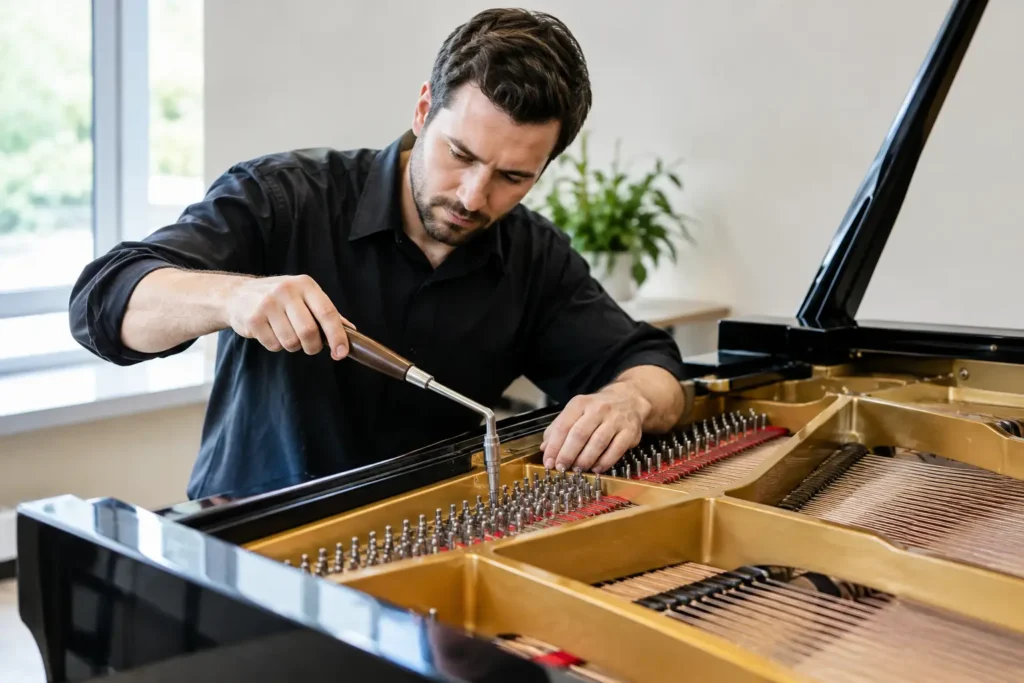
A piano can still produce every note and yet be asking for attention. Perhaps the octaves no longer sound clean together, a familiar piece feels strangely unsettled, or a child is becoming discouraged because the instrument does not sound as good as the progress they are making. Booking a piano tuning service in Essex is one of the simplest ways to restore the pleasure of playing and protect an instrument that matters to your home.
Pianos are wonderfully sensitive instruments. Their strings sit under considerable tension, while the wooden soundboard, action and tuning pins respond to changes in temperature and humidity. Even a piano that is rarely played will gradually move out of tune. Regular professional care gives every player – from a complete beginner to an experienced performer – a dependable instrument on which to learn, practise and enjoy music.
Why pianos go out of tune
A piano has more than 200 strings, most of them under very high tension. Tuning means carefully adjusting those strings so that each note sits at the correct pitch and works harmoniously with the notes around it. It is skilled work, requiring a trained ear, specialist tools and an understanding of how the whole instrument responds.
The biggest influence is usually the environment. During colder, damper months, wood can absorb moisture and expand. In warmer, drier conditions, it contracts. These small movements alter string tension and can make pitch rise or fall. Central heating, underfloor heating, open fires, conservatories and a piano placed near a radiator can all make the changes more pronounced.
Playing also has an effect. A well-used family piano, a teaching piano or an instrument being prepared for an examination may need more frequent attention than one played occasionally. This is not a sign that anything is wrong. It is simply part of owning an acoustic piano.
How often should you arrange piano tuning in Essex?
For most homes, a professional tuning twice a year is a sensible rhythm. This helps the piano remain stable through the seasonal changes that affect indoor conditions, and avoids allowing it to drift too far from concert pitch.
There are times when more frequent tuning is worthwhile. A new piano often needs several tunings during its first year as strings settle and the instrument adjusts to its new surroundings. A piano used intensively for lessons, rehearsals or performances may also benefit from more regular appointments. If a player is working towards a graded examination, audition or recital, arranging a tuning in advance can bring welcome confidence.
It also depends on the piano’s history. An instrument that has been left untuned for several years may need more than one visit before it can be brought back to a stable pitch. In this case, a tuner may recommend a pitch raise followed by a further tuning once the strings have settled. It takes patience, but it is the right approach for the instrument.
Signs it is time to book
The most obvious sign is a piano that sounds noticeably flat, sharp or uneven. You may hear a wavering quality when two notes are played together, particularly in octaves or chords. Notes that should feel settled can sound slightly uncomfortable, even to someone without musical training.
There are practical signs too. If it has been around six months since the last appointment, if the seasons have changed significantly, or if the piano has recently been moved, it is sensible to arrange a check. A move can expose a piano to different temperatures and humidity levels, and even a careful relocation may affect its tuning.
Do not wait until the instrument sounds very poor. Keeping up with regular maintenance is generally kinder to the piano and more rewarding for the person playing it.
What happens during a professional tuning?
A professional tuner will assess the piano’s overall pitch and stability before making precise adjustments across the keyboard. The aim is not merely to make individual notes sound better in isolation. Each note must relate correctly to the others, so scales, chords and melodies sound balanced from the deepest bass to the highest treble.
A tuning appointment is also a useful opportunity to spot developing issues. The tuner may notice sticky keys, worn hammer felts, loose fittings, pedals that need attention or signs that the instrument would benefit from further servicing. Not every concern needs immediate work, but early advice can help you plan sensibly and prevent a small fault from becoming a bigger interruption to playing.
Tuning, regulation and voicing are related but different services. Tuning adjusts pitch. Regulation addresses how the mechanism feels and responds, such as keys that are uneven or slow to return. Voicing alters the tone of the hammers, helping a piano sound warmer or brighter where appropriate. If a piano is difficult to play as well as out of tune, mention this when arranging the visit so the right support can be considered.
Preparing your piano for the appointment
There is very little you need to do. Make sure the piano is accessible, remove anything stored on the lid or music stand, and allow enough space for the tuner to work comfortably. It is helpful to keep the room reasonably quiet during the appointment, as tuning relies on careful listening.
Try not to make sudden changes to the room temperature immediately beforehand. A piano that has just been warmed by a blazing fire or cooled by an open window may continue to shift as the room settles. Normal day-to-day conditions are best, because the piano should be tuned for the environment in which it is usually played.
If you have noticed a particular problem – a sticking key, an unusual buzz, a pedal that squeaks or a note that fails to sound – make a note of it. Small details help ensure the visit addresses what you are hearing and feeling at the keyboard.
Everyday care between tunings
Good placement makes a genuine difference. Keep an acoustic piano away from direct sunlight, radiators, fireplaces, exterior doors and areas prone to damp. It is not always possible to create perfect conditions in a busy family home, but avoiding extremes and sudden changes will support better tuning stability.
Dust the cabinet gently with a soft, dry cloth, and avoid placing drinks, plants or heavy ornaments on the piano. Spills can damage both the finish and the internal mechanism. The keys should be cleaned carefully with a barely damp cloth where needed, then dried straight away. Avoid household sprays and polishes unless they are specifically suitable for piano finishes.
Most importantly, play it. Regular playing helps learners build confidence, gives returning adults a valued part of the week and fills a home with music. A well-maintained piano responds more predictably, which makes practice feel encouraging rather than frustrating.
A piano ready for every stage of learning
For children taking their first steps, an in-tune piano helps develop a reliable ear. For more advanced musicians, accurate pitch supports expressive playing, ensemble work and confident preparation for performances. Adults returning after years away often rediscover how much more inviting practice feels when the instrument sounds as it should.
With nearly 50 years of supporting musicians across the county, Allegro Music Academy understands that instrument care and musical progress go hand in hand. A regular tuning is not simply a maintenance task. It is an investment in the enjoyment, confidence and lifelong love of music that grows each time someone sits down to play.
If your piano has not been tuned recently, if it has moved house, or if its sound no longer reflects the effort being put into it, arranging professional attention is a positive next step. A piano that is cared for well is always ready for the next lesson, favourite tune or family singalong.