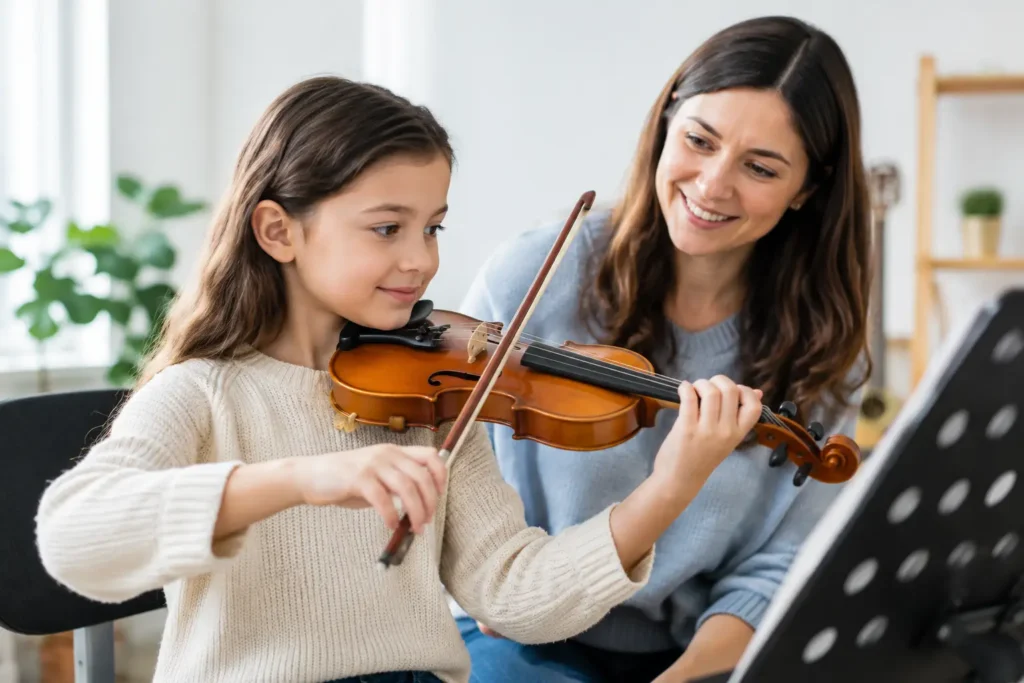
A three-year-old happily tapping a beat on the kitchen table and a seven-year-old asking for a guitar can both be showing a genuine interest in music. But when should children start instruments in a way that feels enjoyable rather than pressured? The answer is less about reaching a magic birthday and more about matching the instrument, lesson style and expectations to the individual child.
Some children are ready to begin structured tuition at four or five. Others will flourish when they are a little older, with longer concentration and a clearer idea of what they would like to play. A positive start matters far more than an early one. The aim is to build confidence, curiosity and a lifelong love of music.
When should children start playing instruments?
Many children can begin age-appropriate music lessons from around four or five, particularly on piano, keyboard, violin or ukulele. At this stage, lessons should be practical, playful and carefully paced. Young learners often respond brilliantly to songs, rhythm games, listening activities and short pieces that give them an early sense of achievement.
From around six or seven, children may be ready for a wider range of instruments. Their hands are larger, their reading skills are developing and they can usually focus for longer. Guitar, drums, brass and woodwind often become more practical options at this age, although this varies according to the child and the particular instrument.
There is no disadvantage to starting later. A child who begins at nine, 12 or during their teenage years can make excellent progress, especially when they are motivated and have chosen the instrument themselves. Older beginners may also understand practice routines and musical ideas more quickly. Starting young can offer more years of experience, but enthusiasm is what keeps learning moving forward.
Look for readiness, not just age
Parents often worry that they have missed the right window. In reality, readiness is more useful than a date on the calendar. A child does not need to sit perfectly still or read music before their first lesson. They do, however, benefit from being able to listen, take turns and engage with a teacher for a short period.
A few signs can suggest that a child is ready to try an instrument. They may sing favourite songs repeatedly, copy rhythms, enjoy making up tunes, ask questions about instruments or show pride when they learn a new skill. They may also simply be excited by the sound of a particular instrument. That enthusiasm is worth paying attention to.
Equally, a child who is not ready for formal lessons may still be ready for music. Singing, dancing, clapping games and listening to a broad range of music all develop important foundations. There is no need to turn every musical interest into a commitment immediately. Giving children room to explore can make their eventual choice feel more personal and lasting.
Concentration grows with the right teaching
Young children usually have shorter attention spans, so a good lesson is not a miniature version of an adult lesson. It should change activity regularly, include familiar music and offer achievable challenges. A skilled teacher will make space for movement, repetition, imagination and praise, while gradually introducing technique and musical understanding.
This is why the teaching environment matters. In welcoming, purpose-built rooms, children can focus on learning without feeling that they are being tested. One-to-one tuition can be particularly helpful for a child who needs lessons tailored closely to their pace, while small-group lessons can suit those who gain confidence from learning alongside others.
Choosing an instrument your child can manage
The best first instrument is usually one that a child is genuinely drawn to and can play comfortably. It is tempting to choose solely on practicality, but an instrument they are excited about is much more likely to be practised.
Piano and keyboard are popular starting points because children can create a clear sound straight away. They help learners understand pitch, rhythm and musical patterns, and the layout of the keys makes notes easy to see. They are also an excellent foundation for children who may later decide to try another instrument.
Ukulele can be a cheerful and accessible choice for younger children because of its smaller size and softer strings. Guitar is often requested by children who love bands and popular music, though a correctly sized instrument is essential for comfort. Drums can be ideal for children with a strong sense of rhythm and plenty of energy, while violin suits those who enjoy its expressive sound and are happy to develop careful listening skills.
Wind and brass instruments need some additional consideration. Children need sufficient breath control, the right physical reach and suitable teeth and mouth development. This does not mean they must wait until they are much older, but it is sensible to ask an experienced teacher which instrument and size will work best. Some children begin with a smaller or lighter related instrument before moving on.
Size and set-up are not small details
An instrument that is too large, poorly adjusted or difficult to hold can make a willing child feel frustrated. Correct sizing, a comfortable strap or chair height, suitable accessories and a reliable instrument all make learning easier from the first week.
Parents do not need to know every technical detail before lessons begin. Specialist advice can help you choose an appropriate starter instrument, and regular servicing or repairs can prevent small problems from interrupting progress. The goal is not to buy the most advanced option, but to give your child something dependable that feels good in their hands.
Begin with realistic expectations at home
The first months of learning are about routine as much as musical ability. A short, regular practice session is usually more valuable than a long session once a week. For a young beginner, five or ten focused minutes on most days may be plenty. As confidence and stamina develop, practice can grow naturally.
Try to make practice part of the household rhythm rather than a daily battle. Keeping the instrument accessible, asking your child to show you a new piece and noticing small improvements all help. Praise their effort, listening and persistence, not only whether they play every note correctly.
There will be uneven weeks. School events, holidays, tiredness and tricky new pieces can all affect motivation. This is normal. If a child is becoming discouraged, speak to their teacher before deciding that the instrument is not for them. Sometimes a new piece, a clearer practice goal or a different musical style is all that is needed to restore their enjoyment.
Let children have a voice in the decision
Parents rightly consider practical matters such as space at home, noise levels and travel to lessons. Yet a child should feel that the instrument is theirs, not simply an activity chosen for them. Let them hear different instruments, watch musicians play and talk about the music they enjoy.
Their first choice does not have to be permanent. Learning piano for a year before moving to drums, or starting on ukulele before progressing to guitar, is not wasted time. Musical skills transfer: rhythm, listening, coordination, confidence and an understanding of how music works will support the next step.
At Allegro Music Academy, experienced teachers work with children at different stages of development, helping families find a starting point that feels encouraging and achievable. Whether a child begins with a few notes at five or picks up an instrument for the first time in secondary school, the right support can turn that first spark of interest into something they look forward to each week.
The best time to begin is when your child has enough curiosity to give it a try, and enough support to enjoy the learning. Start gently, choose with care and allow music to become something they can truly call their own.