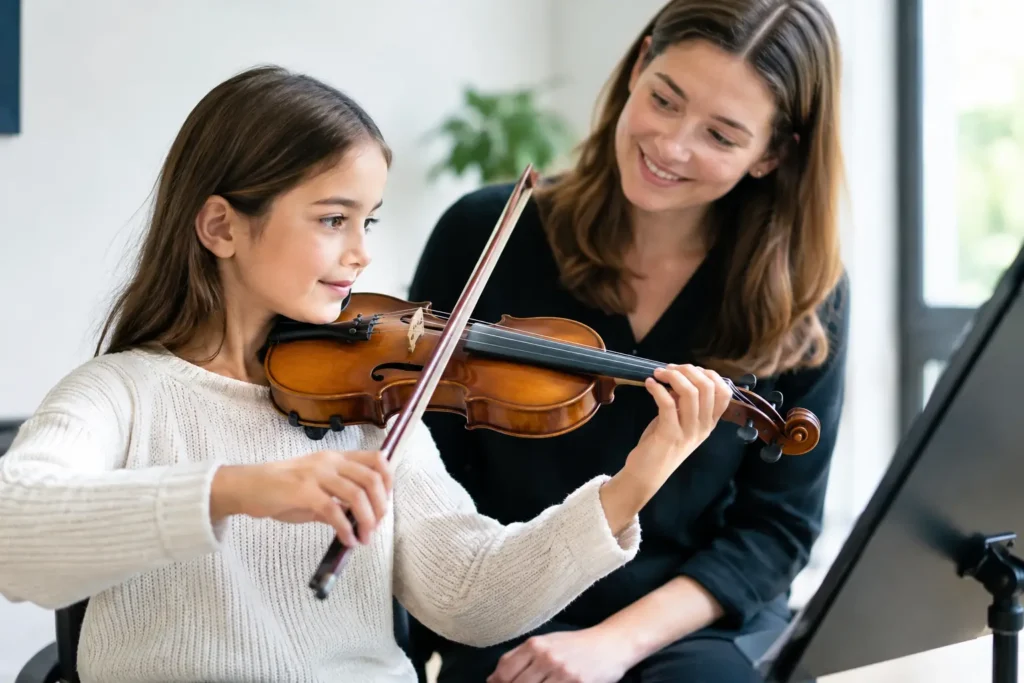
The first sound a new violinist makes is rarely the sound they imagined. The bow may skid, a note may squeak and holding the instrument can feel surprisingly unfamiliar. That is exactly why one-to-one violin tuition is such a rewarding place to begin: each lesson gives the player calm, practical support at the moment it is needed, turning those early challenges into real musical progress.
For children, teenagers and adults alike, the violin offers a wonderful balance of discipline, creativity and expression. It can become a sociable hobby, a serious academic pursuit or simply a much-loved part of the week. With the right teacher and a pace that feels achievable, learning the violin is not about getting everything right immediately. It is about building the skills and confidence to keep going.
Why individual violin lessons make a difference
The violin is an instrument where small details matter. The position of the chin rest, the height of the shoulder rest, the angle of the bow and the shape of the left hand all affect comfort and sound. In a group setting, a teacher has to divide attention between several learners. In an individual lesson, they can notice the details that will make playing easier for one particular student.
That attention is especially valuable at the beginning. A teacher can help a child find a relaxed posture before tension becomes a habit, or help an adult understand why a note is not speaking clearly. They can demonstrate an idea, listen closely to the response and adapt the next step straight away. This makes lessons feel encouraging rather than overwhelming.
One-to-one teaching also leaves room for personality. Some learners enjoy a clear structure, regular targets and graded examinations. Others are motivated by favourite tunes, film music, folk melodies or playing alongside a backing track. A good tuition plan can include both sound technical foundations and music that gives the student a reason to practise.
One-to-one violin tuition for every starting point
A complete beginner needs a different kind of support from a player returning after many years away. Both deserve lessons that take their goals seriously.
For younger children, tuition often begins with the essentials: learning the names of the instrument parts, how to stand or sit comfortably, how to hold the bow and how to make a controlled open-string sound. Rhythm games, familiar melodies and short achievable pieces help make those first skills enjoyable. Parents can also gain useful guidance on supporting practice at home without turning it into a daily battle.
Teenagers may be building towards school performances, ensemble playing, examinations or auditions. Individual lessons can develop greater independence, covering reading music, intonation, bow control, stylistic awareness and performance preparation. There is space to work carefully through the difficult passage that keeps catching them out, rather than simply moving on with the class.
Adult learners bring equally valid ambitions. Some have always wanted to play but never had the opportunity; others played at school and would like to return. Adults often value understanding the reason behind an exercise, as well as seeing steady improvement in music they recognise. There is no age at which it is too late to learn the violin, although patience and regular practice remain more useful than unrealistic expectations.
Progress is personal, not a race
It is tempting to compare progress with another player, particularly when social media makes advanced performances look effortless. Yet violin learning is not a straight line. A student may make rapid gains with reading music, then need more time to develop consistent intonation. Another may play by ear beautifully but need support with rhythm or bowing patterns.
Individual tuition allows the teacher to respond to those differences. The aim is not to rush through books for the sake of it. It is to make sure each new skill is secure enough to support the next one. That approach builds capable, confident musicians who can enjoy playing long after a particular piece or examination has passed.
What happens in a violin lesson?
A well-planned lesson combines practical work with music-making. The exact content changes as a learner develops, but lessons may include warm-ups, bowing exercises, scales, ear training, sight-reading and repertoire. A teacher will usually listen to a piece the student has prepared, identify what will make the biggest difference and then work on it in manageable stages.
For a beginner, that may mean producing an even tone on two open strings. For a more experienced player, it could mean shaping a phrase, improving shifting between positions or preparing for a performance. The most useful lessons do not simply point out mistakes. They give the learner a clear way to solve them independently during the week.
There should also be time to play. Technique has a purpose: it gives musicians more freedom to communicate through the music. Whether the piece is a simple traditional tune or a more demanding work, the student should leave knowing what they have achieved and what to focus on next.
Practice that fits family life and busy weeks
Regular practice matters, but it does not have to mean long, stressful sessions. For a beginner, short and focused practice several times a week is usually more effective than trying to fit everything into one session. Five thoughtful minutes spent on bow hold, rhythm or a tricky bar can be genuinely worthwhile.
Children often do best with a predictable routine. Keeping the violin in an accessible, safe place and agreeing a realistic practice time can remove some of the friction. A parent does not need to be a musician to help. Encouragement, a quiet space and interest in what the child is learning go a long way.
Adults may need an even more flexible approach. Work, caring commitments and travel can interrupt the best intentions. In those weeks, maintaining contact with the instrument can be enough: play a scale, revisit a favourite section or listen critically to a recording. Consistency over months matters far more than the occasional perfect practice week.
Choosing the right violin and keeping it playable
An unsuitable instrument can make learning harder than it needs to be. Violins come in different sizes for younger players, and correct sizing is important for comfort, posture and safe technique. A teacher or knowledgeable specialist can advise on a suitable fit, rather than relying on age alone.
The quality and condition of the instrument matter too. Strings, bow hair, bridge position and tuning pegs all affect how a violin feels and sounds. A very inexpensive instrument may seem practical at first, but if it will not stay in tune or is difficult to play, it can quickly discourage a keen beginner.
It helps to think beyond the violin itself. A secure case, suitable shoulder rest, good-quality rosin and a working bow are part of the playing experience. As students progress, they may also benefit from advice on maintenance and servicing. Looking after an instrument protects the investment and helps practice remain enjoyable.
A welcoming place to learn and perform
The right learning environment can shape a student’s confidence as much as the lesson plan. Purpose-built rooms, experienced specialist teachers and a friendly atmosphere allow learners to concentrate without feeling judged. For families, professional tuition also brings reassurance that a child is being taught safely and thoughtfully.
At Allegro Music Academy, violin lessons are available for learners at every stage, with a supportive approach that values both progress and the joy of music. With academies in Chelmsford, Southend and Colchester, and seven-day availability, lessons can fit around school, work and family commitments rather than becoming another pressure.
For some students, a first lesson leads to casual enjoyment at home. For others, it opens the door to orchestras, examinations, performances and a lifelong musical interest. Neither outcome is more worthwhile. What matters is finding a teacher, instrument and routine that make picking up the violin feel like something to look forward to each week.