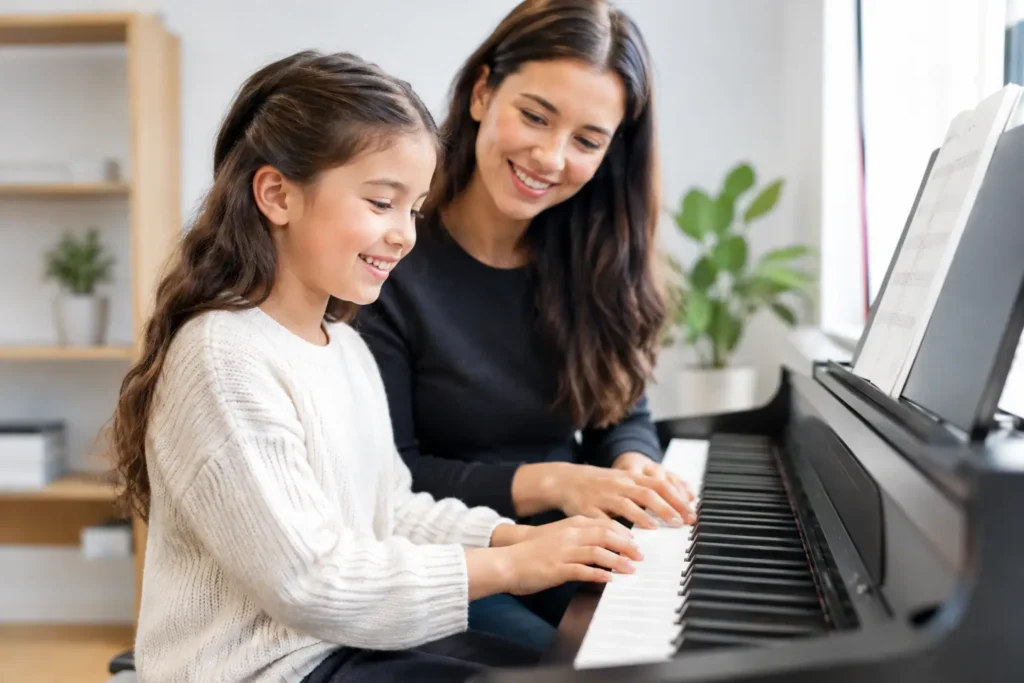
A first piano lesson can begin with one note, one rhythm and a surprisingly big sense of achievement. For some learners, piano lessons are the start of a lifelong love of music. For others, they are a welcome return to an instrument they once played at school. Either way, the best tuition makes progress feel possible from the very beginning.
The piano is a wonderfully versatile instrument. It can carry a simple tune, provide harmony for a singer, support a band or fill a room on its own. It also gives beginners a clear visual map of music, while offering enough depth to challenge experienced players for decades.
What good piano lessons should offer
A strong start is not about rushing through a book or trying to play difficult pieces too soon. It is about building secure foundations in a way that remains enjoyable. Learners need to understand where notes sit on the keyboard, how rhythm works and how to use both hands together without becoming discouraged.
An experienced teacher will shape this process around the individual. A young child may learn best through short musical activities, familiar tunes and imaginative games. A teenager might be motivated by film music, pop arrangements or grades. An adult beginner may want a calm, practical route into playing pieces they enjoy at home. The destination can differ, but good technique, musical understanding and regular encouragement matter to everyone.
Piano tuition should also leave room for personality. Some pupils enjoy classical repertoire and structured examination goals; others want to accompany themselves while singing, improvise, write songs or learn favourite melodies. These aims are not in conflict. A thoughtful lesson plan can develop reading, listening, coordination and expression while keeping the music relevant to the learner.
Technique is there to make music easier
Technique can sound formal, but it is simply the set of habits that helps a pianist play comfortably and confidently. Sitting at the right height, shaping the hand naturally, using relaxed arms and learning efficient finger patterns all make a genuine difference. They reduce unnecessary tension and allow a player to produce a more controlled, musical sound.
For beginners, this may mean learning how to place the fingers before tackling a short tune. As players develop, scales, arpeggios, chords and exercises become useful tools rather than chores. They strengthen coordination, improve familiarity with keys and prepare pupils for more demanding music.
There is a balance to strike. Technique without enjoyable music can feel dry, while only playing familiar tunes can leave gaps that slow progress later. The most rewarding lessons combine both, so that each new skill has a clear purpose at the keyboard.
Choosing the right format for piano lessons
The right lesson format depends on age, confidence, goals and weekly routine. One-to-one tuition offers focused attention and a programme tailored closely to the pupil. It is particularly helpful for learners preparing for examinations, working towards advanced repertoire or returning to the piano with specific goals.
Small-group lessons can be an excellent choice for younger beginners. Learning alongside others encourages listening, turn-taking and confidence, while shared musical games make early skills feel social and engaging. Group learning is not necessarily better or worse than individual tuition; it simply suits different learners at different stages.
Live online lessons can also work very well, especially for busy families and adults fitting music around work or caring commitments. They require a suitable instrument, reliable connection and a quiet place to learn, but they can provide continuity when travelling or when a visit to an academy is not practical.
Whichever format is chosen, consistency matters more than perfection. A regular weekly lesson creates momentum, gives pupils a chance to ask questions and provides the friendly accountability that makes practice more purposeful.
Practice that fits real family life
The most common worry parents have is not whether their child will enjoy the first lesson. It is whether practice will become a battle after a few weeks. The answer is rarely to demand long sessions. Short, focused practice on most days is usually far more effective, especially for younger players.
A clear routine helps. Leaving the music open on the stand, choosing a regular time and agreeing a manageable goal can remove a great deal of friction. Ten thoughtful minutes spent repeating a tricky bar, clapping a rhythm or revisiting a familiar piece can achieve more than a distracted hour.
Parents do not need to be musicians to support a child’s progress. Asking to hear a new piece, noticing improvement and treating practice as a normal part of the week can be enough. Teachers can explain what to listen for and suggest practical ways to help without turning home practice into another school task.
Adult learners need the same kindness towards themselves. Progress may feel slower when fitting lessons around a full life, but maturity brings advantages too: adults often understand their goals, listen carefully and practise with real intention. Missing a few days does not undo everything. The useful response is simply to return to the keyboard.
Progress looks different for every pianist
Early milestones are often easy to spot: recognising notes, playing with two hands, keeping a steady beat or performing a complete tune for family. Later progress can be quieter. A pupil may read music more fluently, recover more calmly from mistakes, use the pedal with greater control or bring more shape and feeling to a phrase.
Examinations can provide valuable structure for pupils who enjoy working towards a recognised goal. They encourage a broad range of skills, including repertoire, scales, sight-reading and aural awareness. However, they are not the only measure of musical success. A player who can sit down after a busy day and enjoy making music has achieved something meaningful too.
Performance opportunities can also be useful when introduced at the right pace. Sharing a piece in a relaxed setting helps pupils learn how to prepare, manage nerves and take pride in their work. No one should be pushed into performing before they are ready, but gentle encouragement often reveals confidence that a learner did not know they had.
Starting with the right instrument
A full-sized acoustic piano is a wonderful instrument, but it is not the only way to begin. A good-quality digital piano with weighted keys can be a practical choice for many homes, particularly where space, volume or maintenance are considerations. The feel of the keys matters: a lightweight keyboard may be useful for trying out notes, but it does not provide the same control or hand development as weighted keys.
It is worth seeking specialist advice before buying. The right choice depends on the player’s age, available space, budget, musical aims and whether headphones are needed. A piano also benefits from proper care. Acoustic instruments need tuning and can require servicing over time, while digital instruments should be set up securely at a comfortable height with a suitable stool.
For families in Essex, Allegro Music Academy can support this journey from the first lesson onwards, with experienced teachers, purpose-built teaching spaces and practical guidance on instruments and their care.
A rewarding place to begin
The most successful piano learning is not built on pressure. It grows through patient teaching, achievable goals and music that gives the learner a reason to return to the keys. Whether the aim is a first simple melody, a graded qualification, a favourite song or advanced performance, every meaningful piece starts with a willingness to play the next note.